
Architecture of Presence | Women in Suits: Blue22
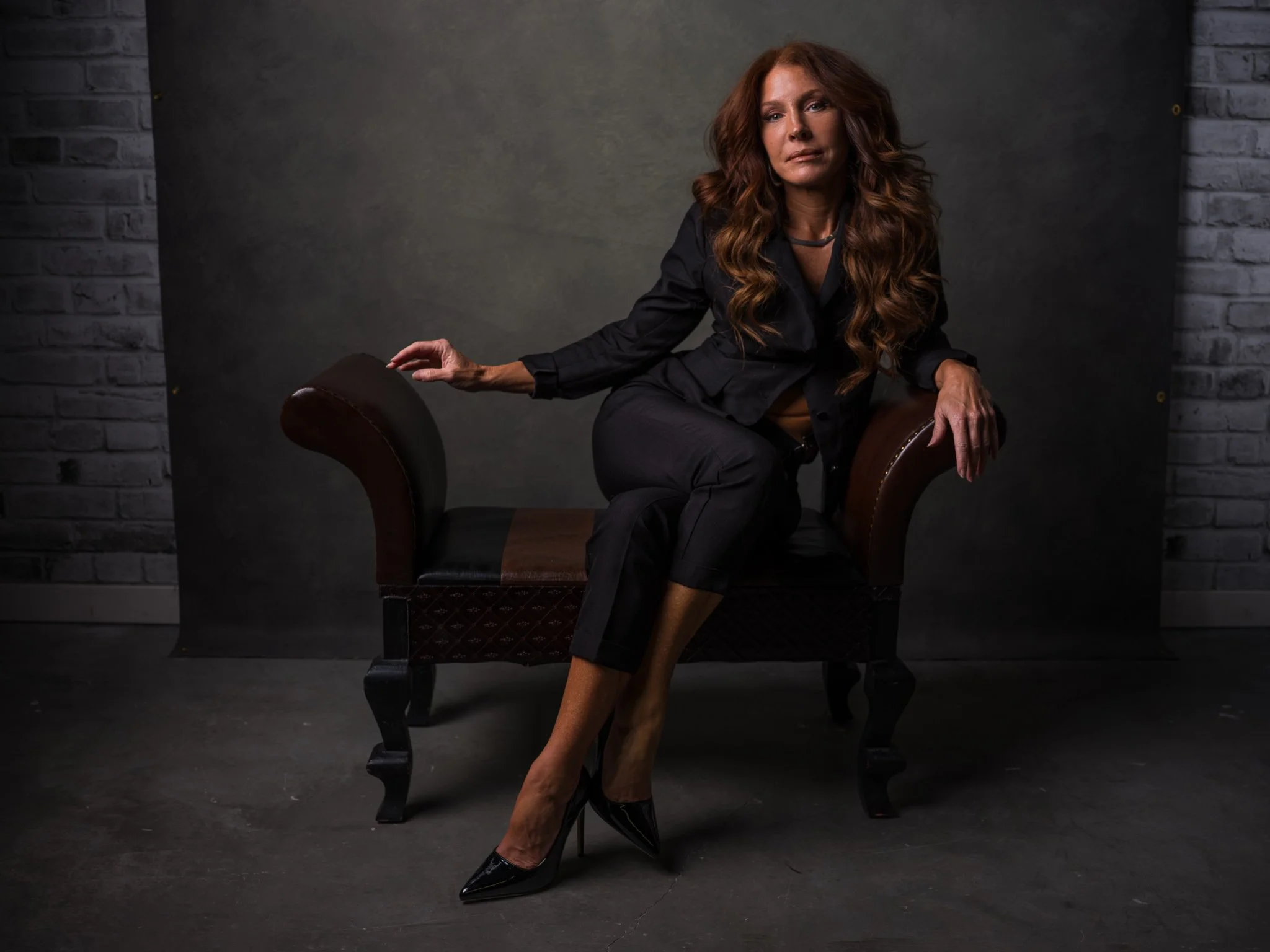
@blue22_life_model
@dadrockstudio
Dad Rock Studio carries a particular kind of silence once the lights are set and the movement settles, a silence familiar to anyone who has spent long enough around portraiture to understand the photograph rarely begins with my shutter. It begins the moment a person decides to remain visible once performance falls away.
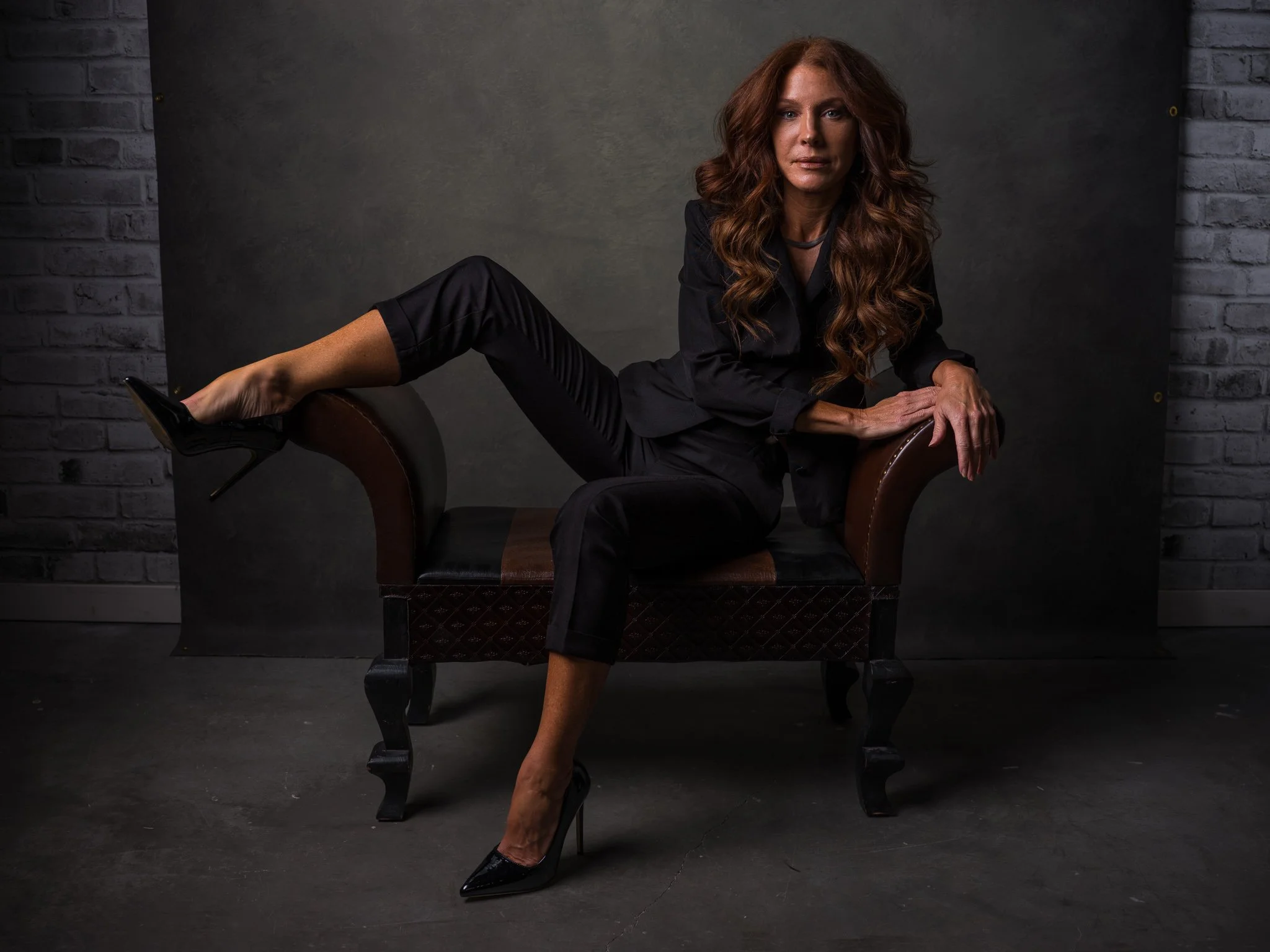
The Women in Suits series has never been interested in tailoring as fashion alone. The suit matters, certainly. Structure always matters. The line of a shoulder, the discipline of black wool, the architecture created by cuffs, lapels, suspenders, pressed seams. The clothing operates as framework, a way of shaping physical and psychological geographies around the body, occupying it.
Lucy understands this instinctively.
Some collaborators arrive carrying ideas of how they wish to appear; others arrive willing to discover something in real time. Lucy moved between both conditions with unusual fluidity. Even in stillness there was movement occurring beneath the surface, a subtle negotiation between composure and release. My favourite camera setup responded to this almost immediately.
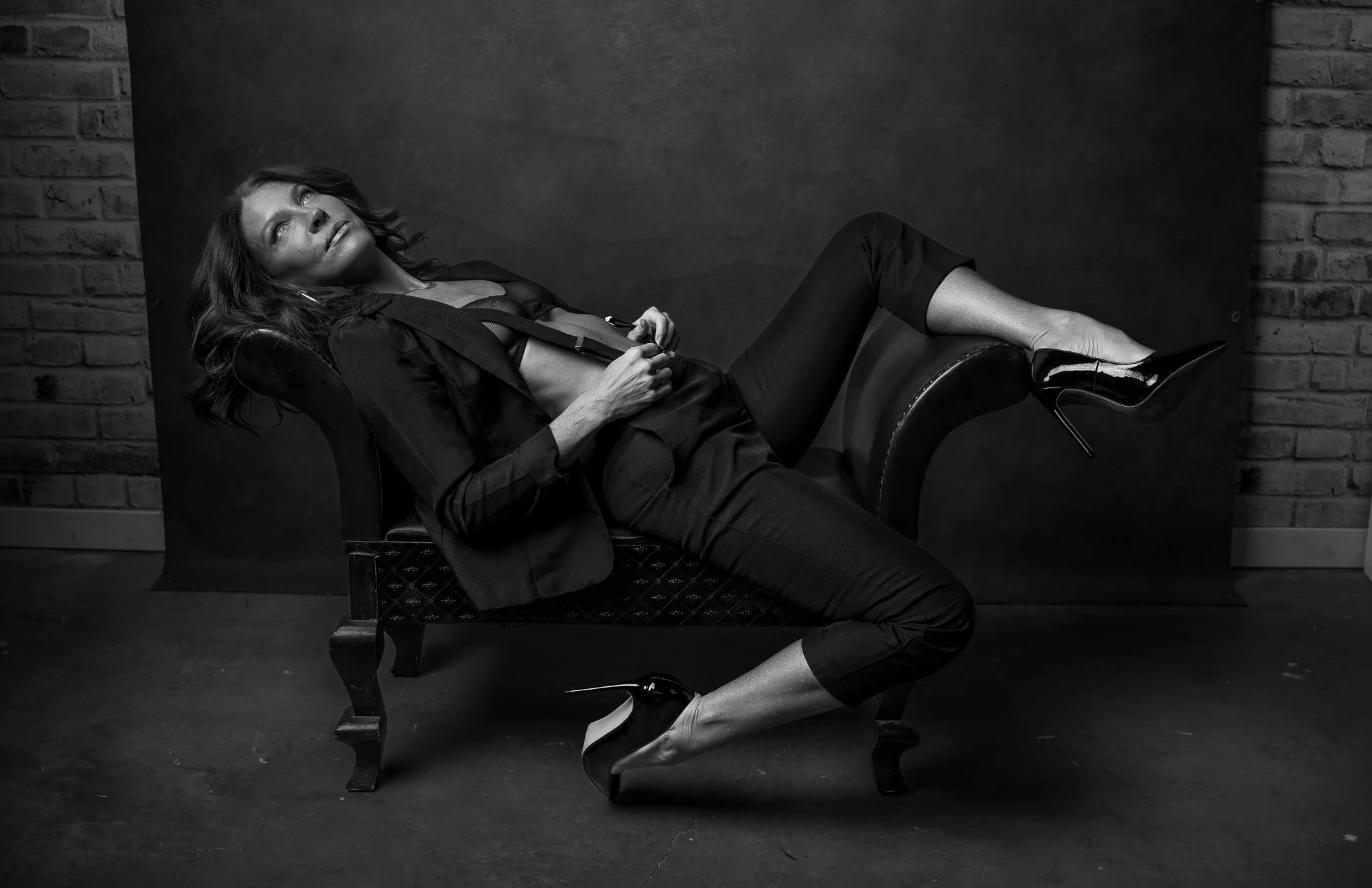
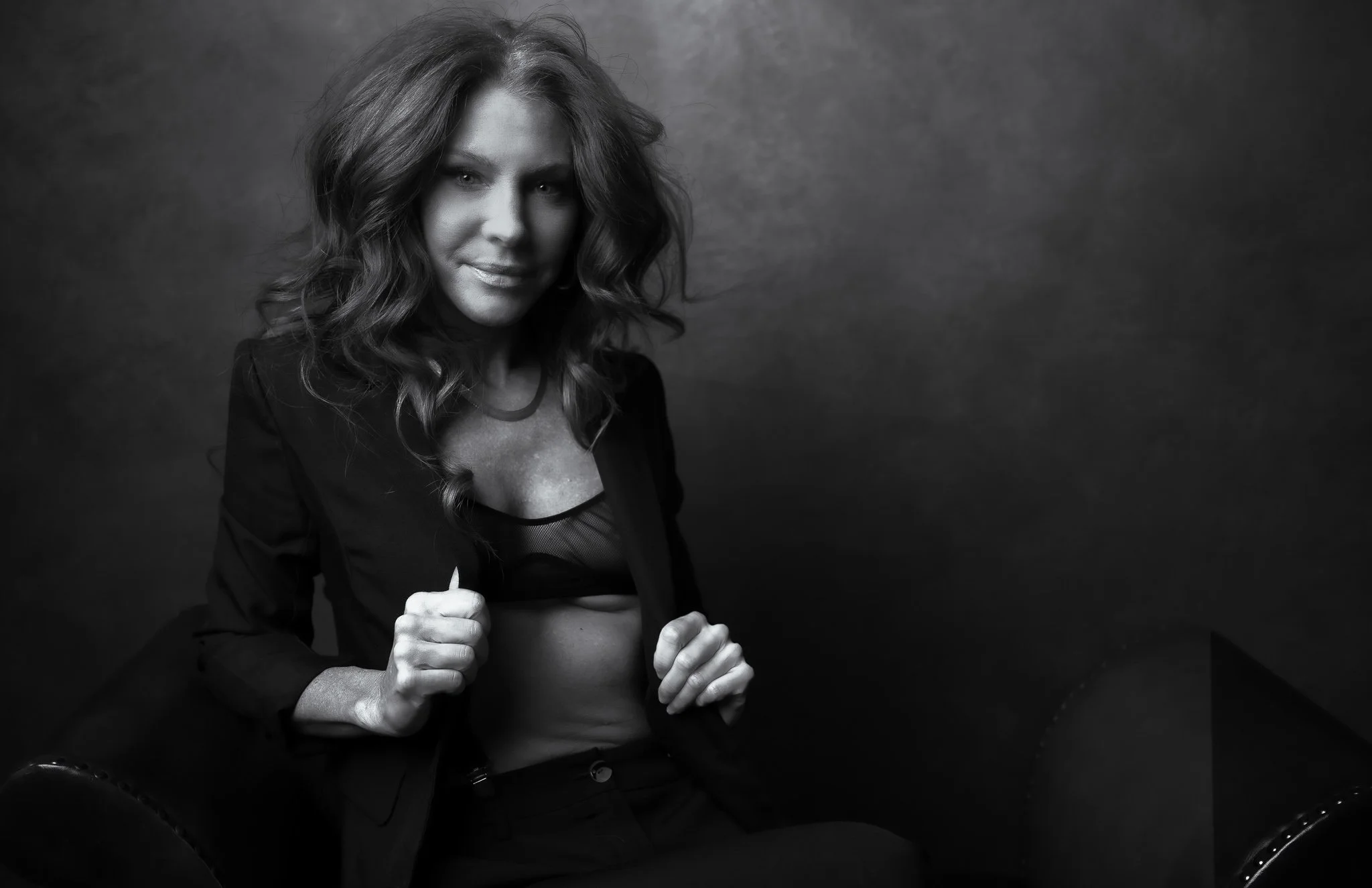
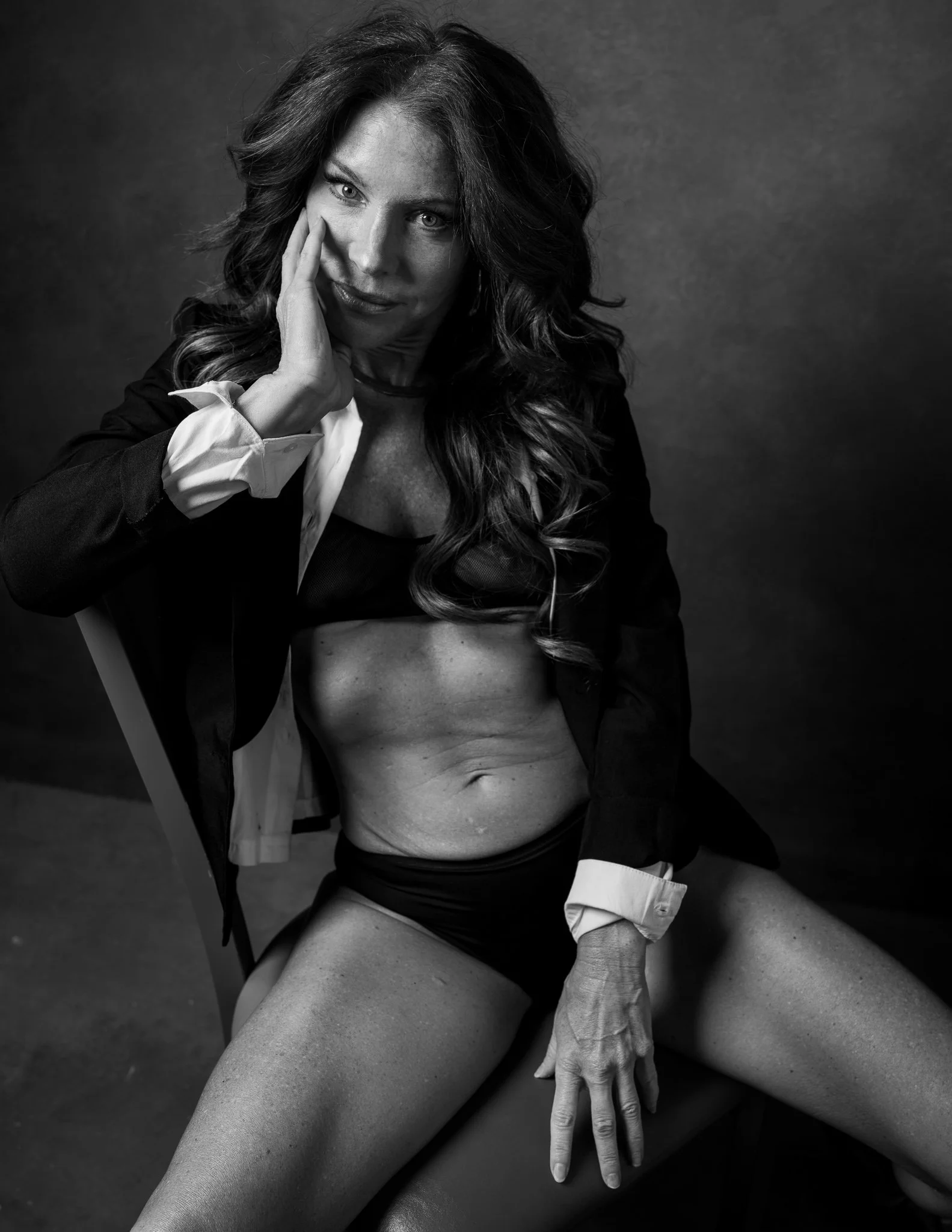
Early frames held a kind of deliberate restraint. Tailoring closed around the body. Posture upright, gesturing economical. The monochrome portraits feel psychologically interior, less concerned with surface seduction than the emotional temperature sitting underneath. Hands drift toward the face, toward the hair, toward the edges of the jacket as though testing the limits of structure itself. In black and white, my images become quieter, more inward. More like private thoughts rendered visible for half a second before retreating again.
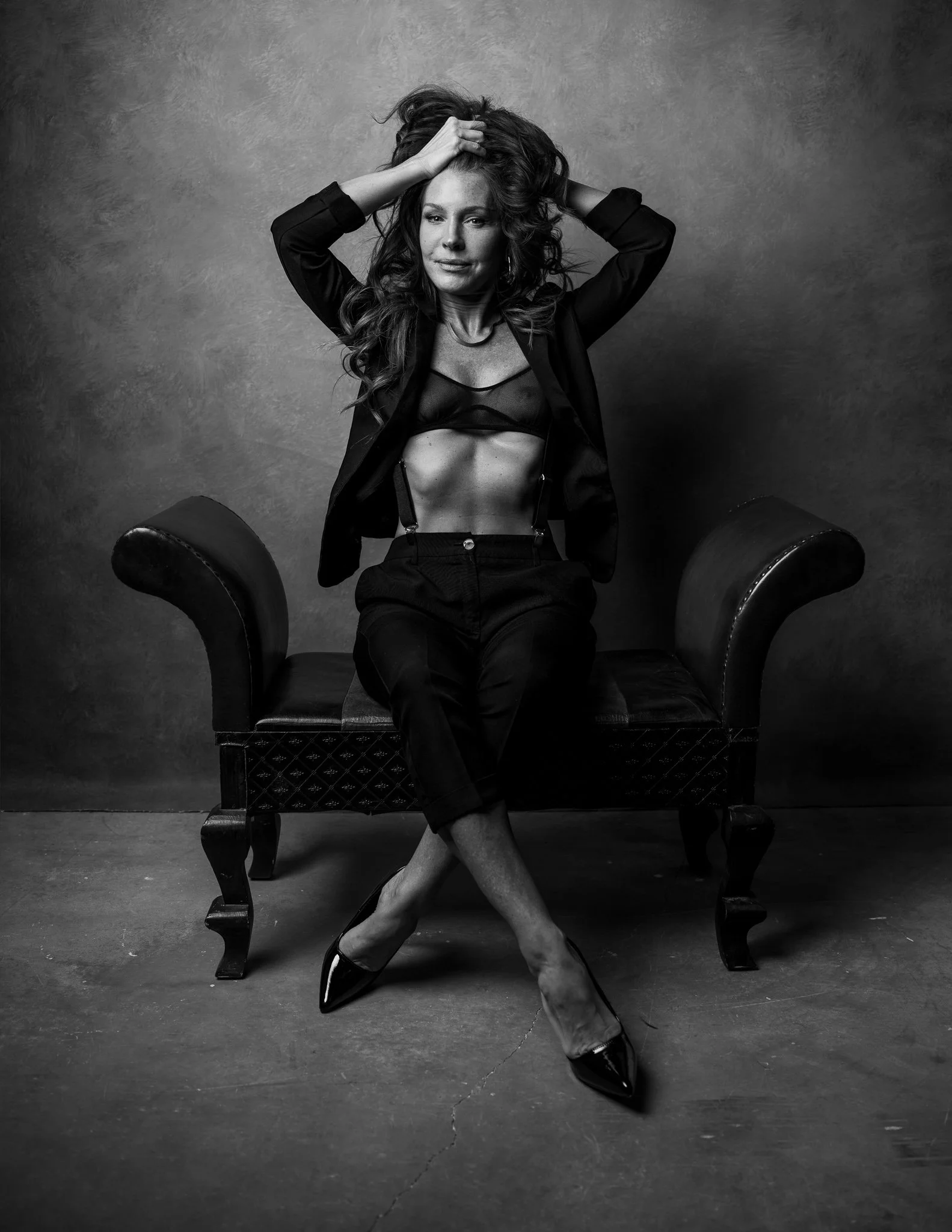
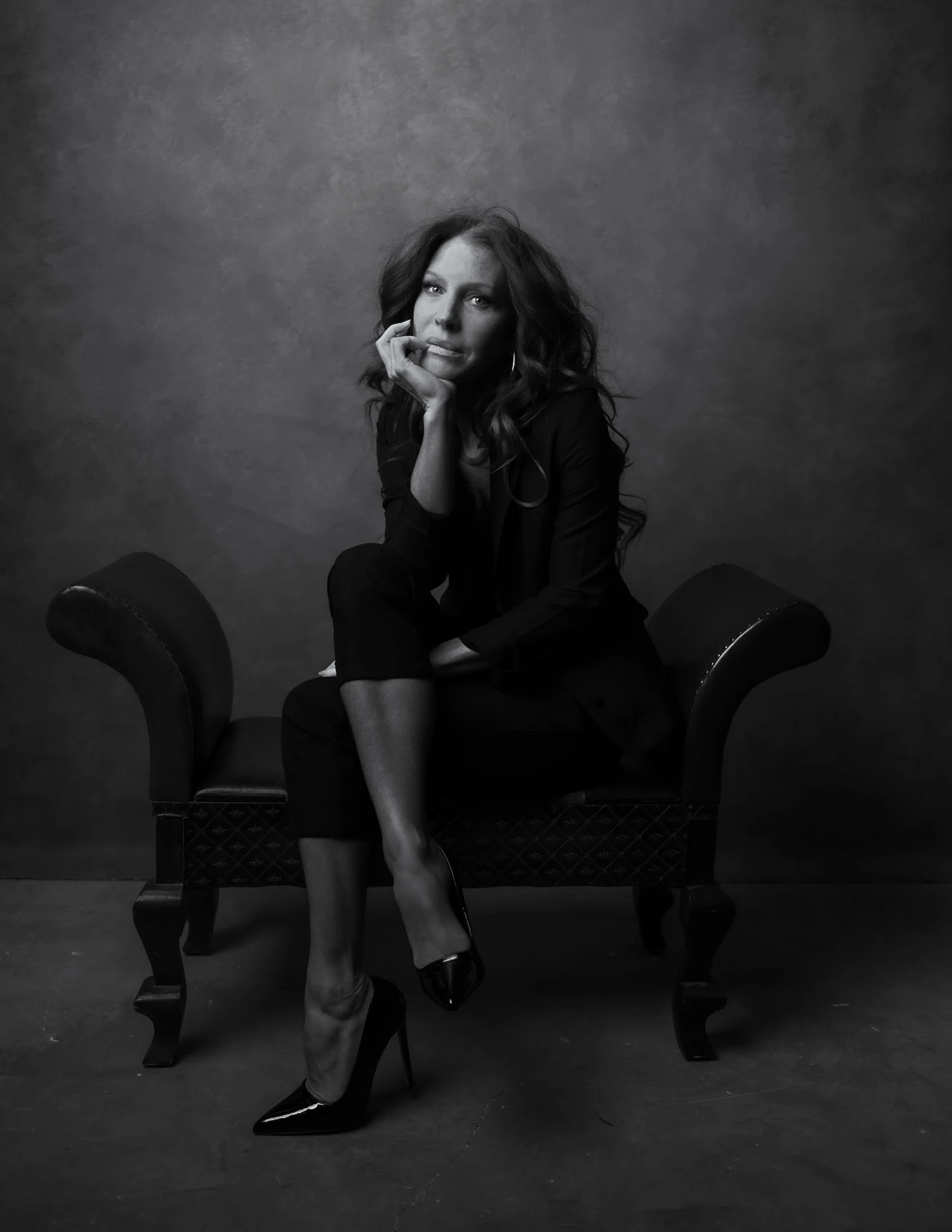
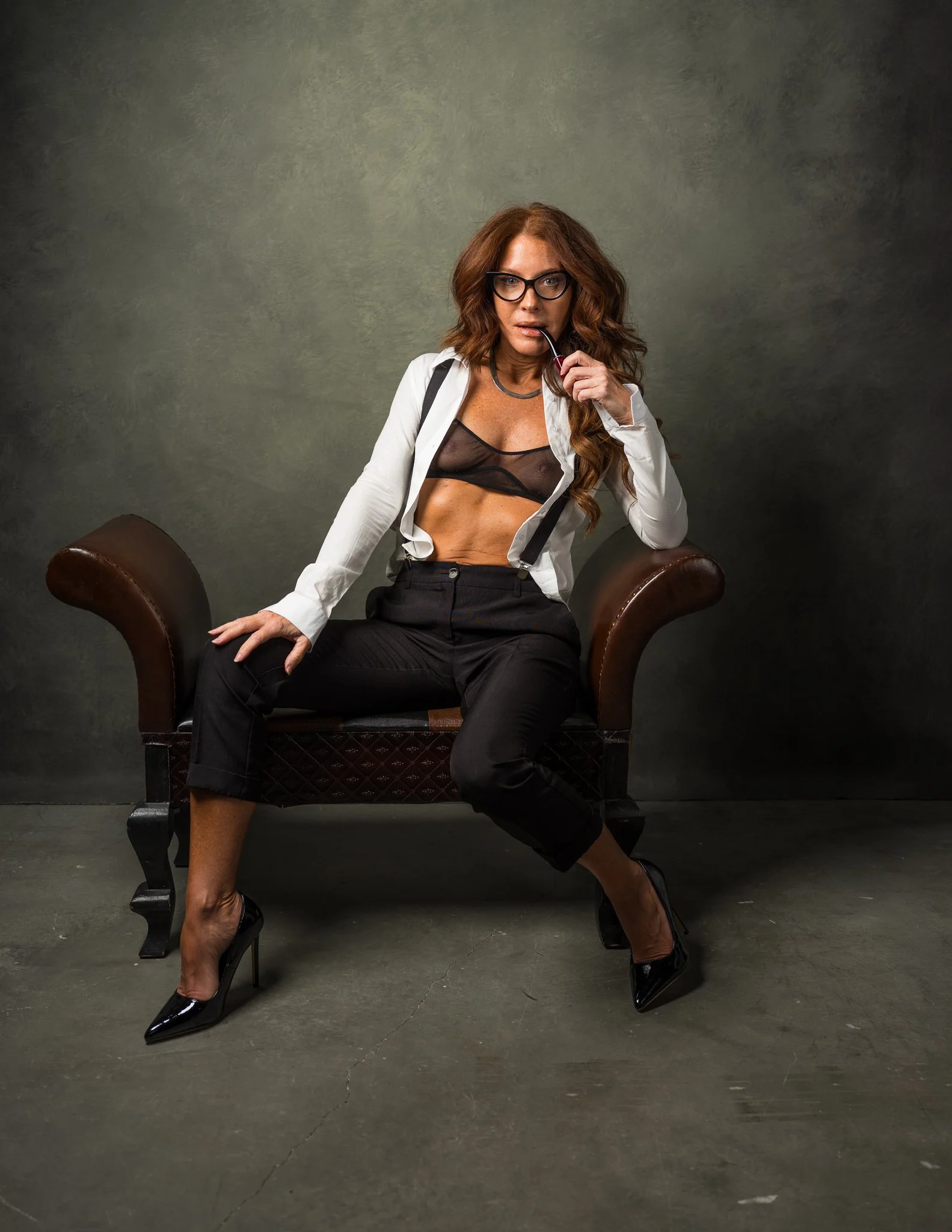
The light remained simple throughout the session, a single large soft box reflected into the shadows by a white V-flat, allowing transitions between highlight and shadow to remain gradual and observational. I wasn’t interested in dramatic contrast or heavy stylization. This series needs room to breathe and evolve. Sculptural, certainly, but still human. The shadows need to hold information rather than consume it.
As our session unfolded, the emotional logic of the work began shifting almost imperceptibly. Jackets opened. Shirts loosened. The suit stopped functioning purely as armour and became something more intimate, more unstable. Exposed torso beneath formal tailoring altered the visual language immediately. Not because nudity inherently creates vulnerability, it doesn’t, but because the coexistence of exposure and structure introduces tension. A blazer worn over sheer fabric carries a different psychological charge than lingerie alone. The body remains present, yet framed by discipline.
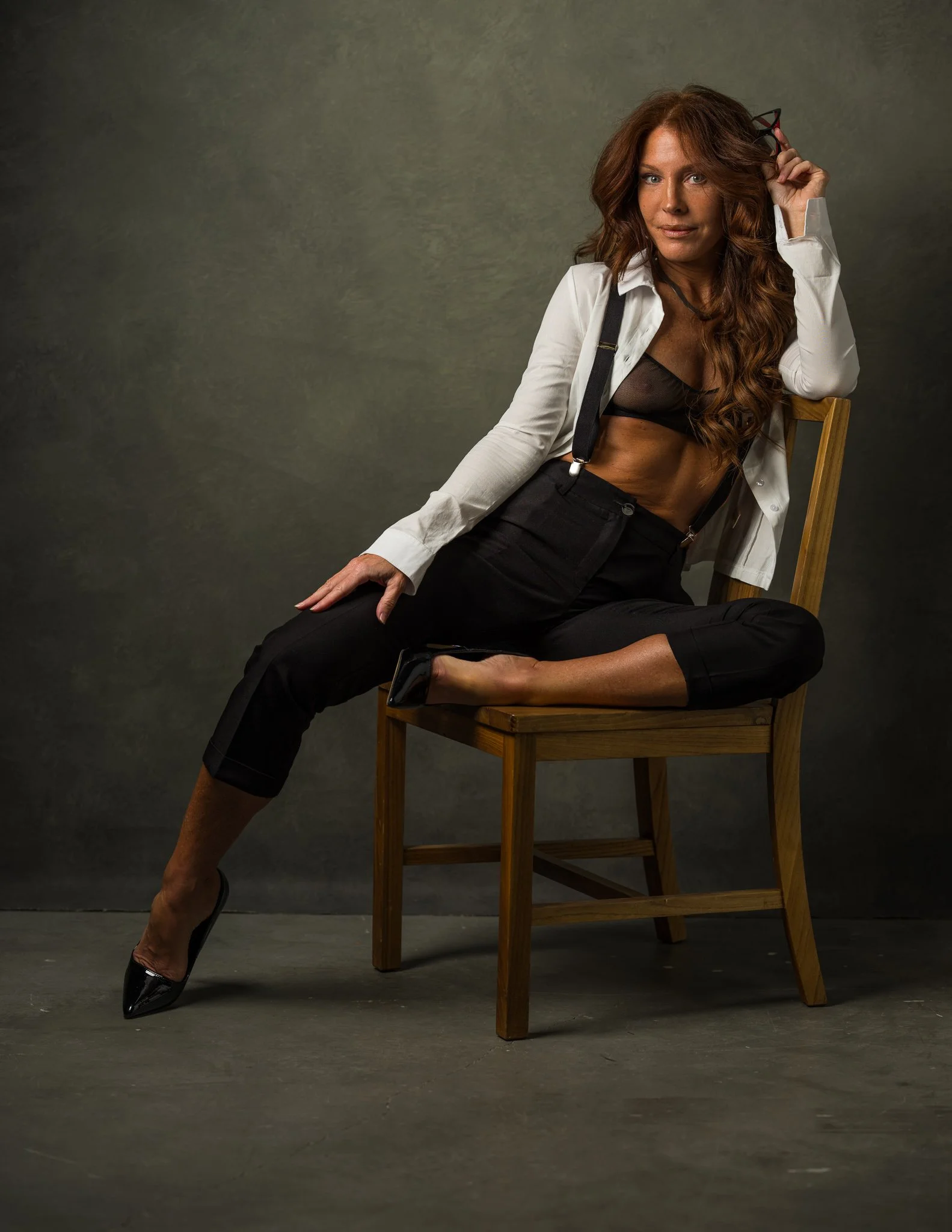
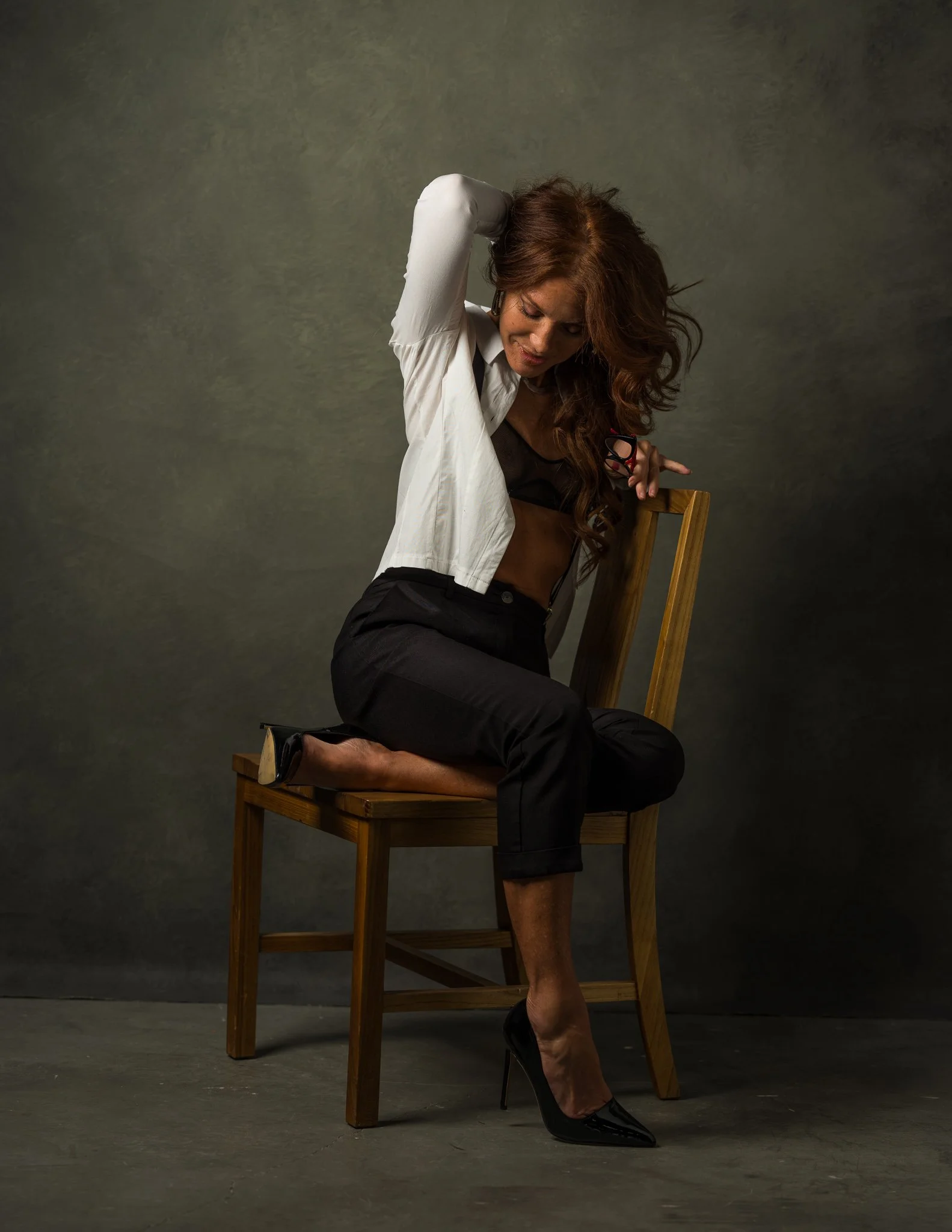
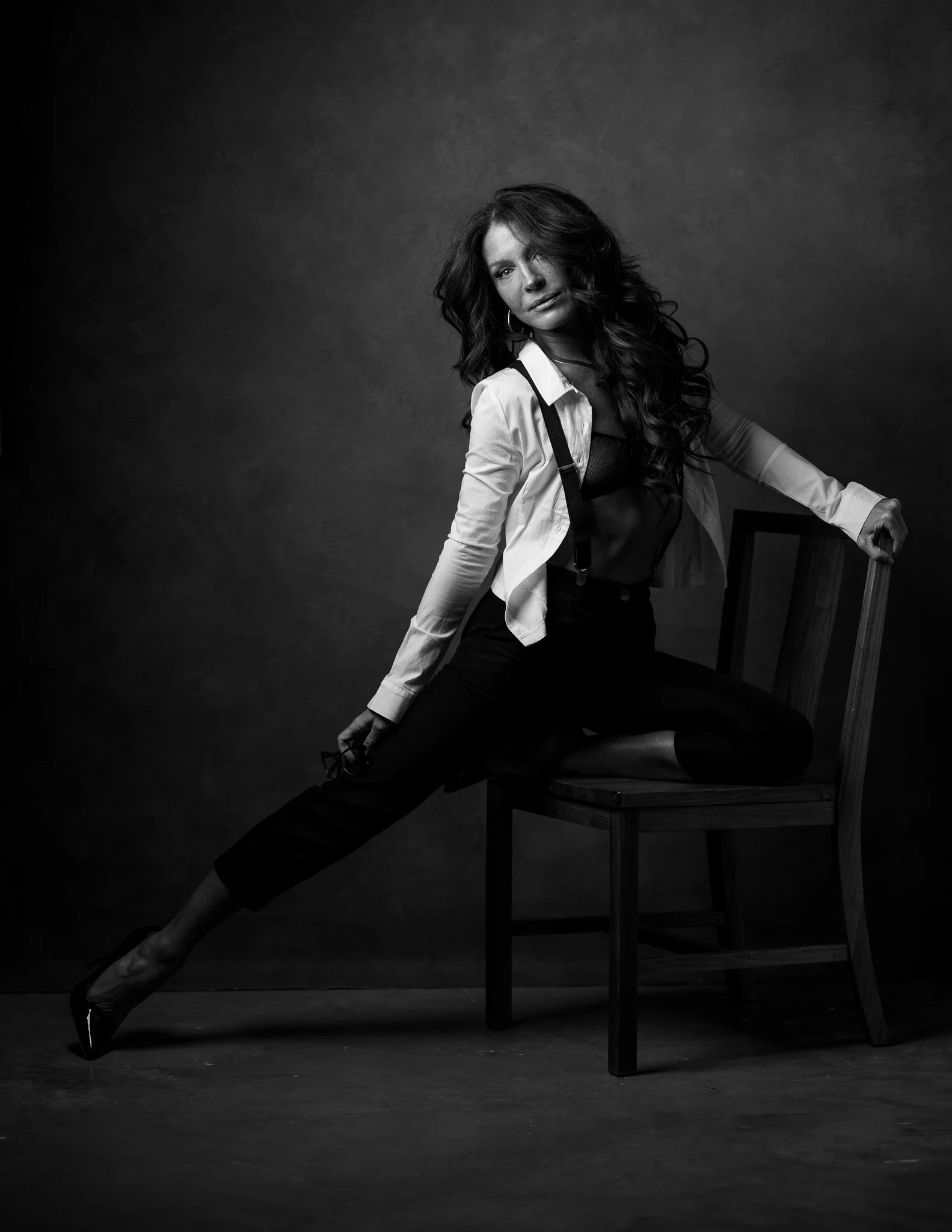
What interested me most was Lucy’s ability to sustain composure even while the imagery moved toward greater intimacy. Nothing collapsed into spectacle. Nothing tipped into caricature. Her restraint held.
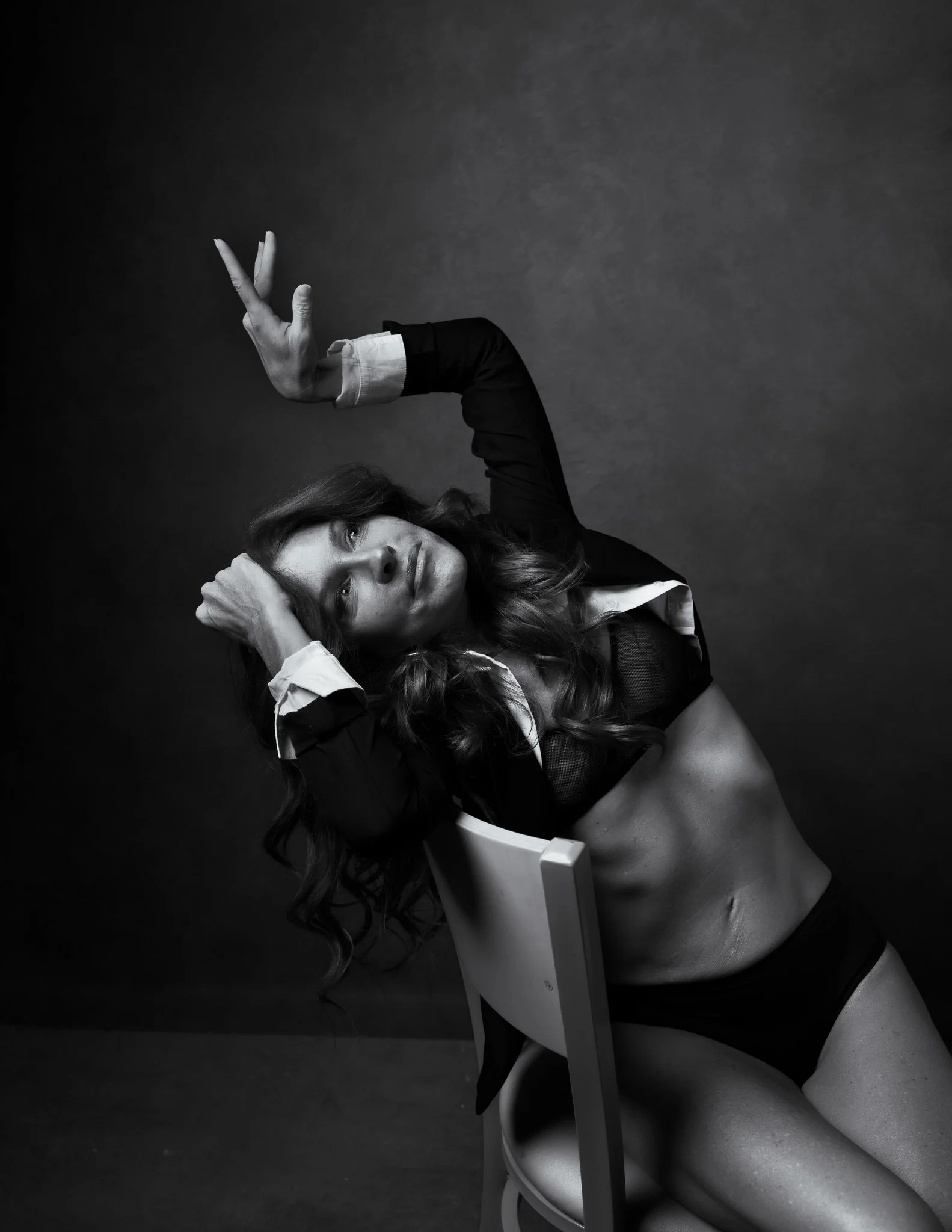
There is a frame of her leaning against a chair, one heel lifted behind her, gaze drifting upward beyond the edge of the set. Another where she folds herself across the chair entirely, body bent almost architecturally, hair falling forward as though the posture itself were carrying emotional weight. Chairs recur throughout the series less as props than as structural anchors, objects against which posture can resist, collapse, recline, negotiate. They create geometry around the body. They slow the image down.
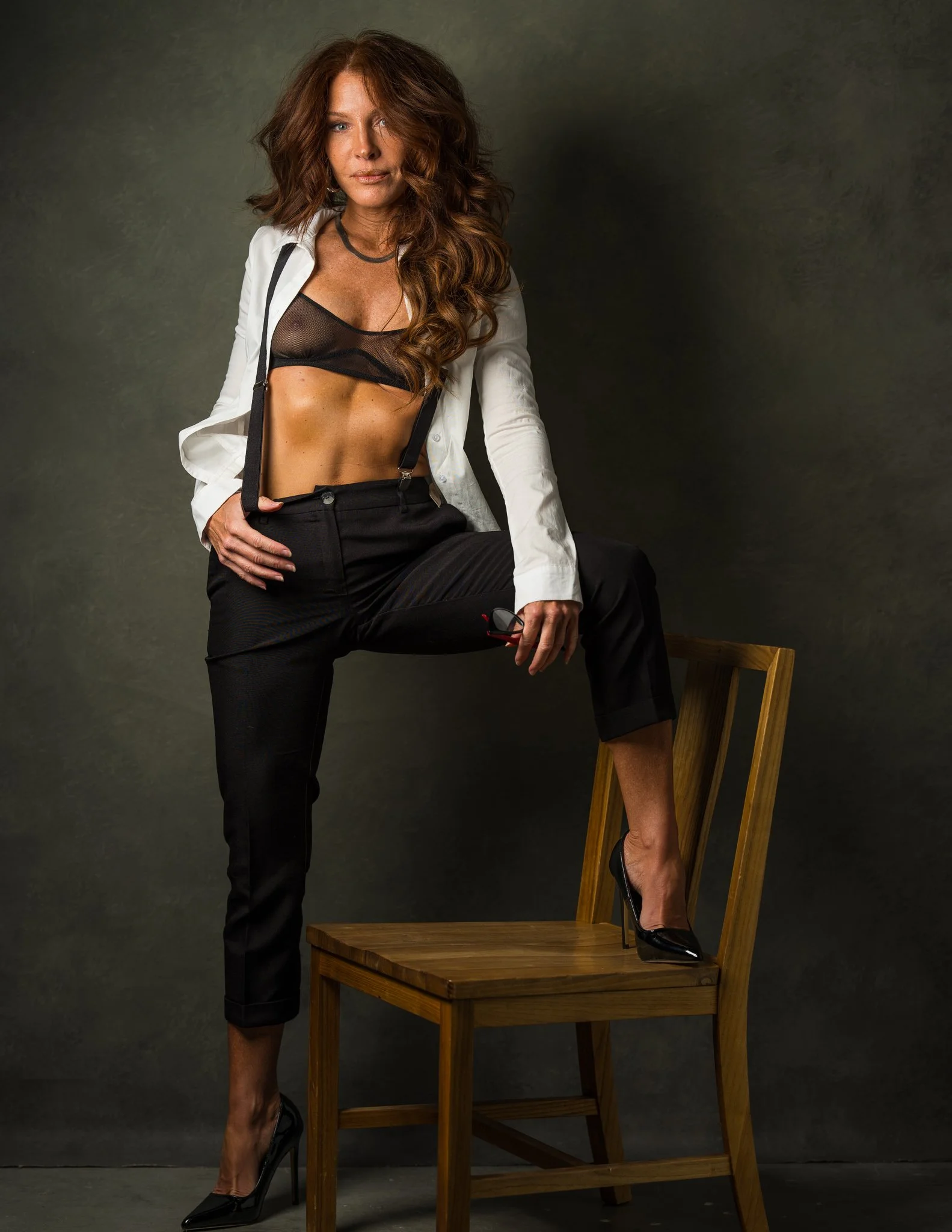
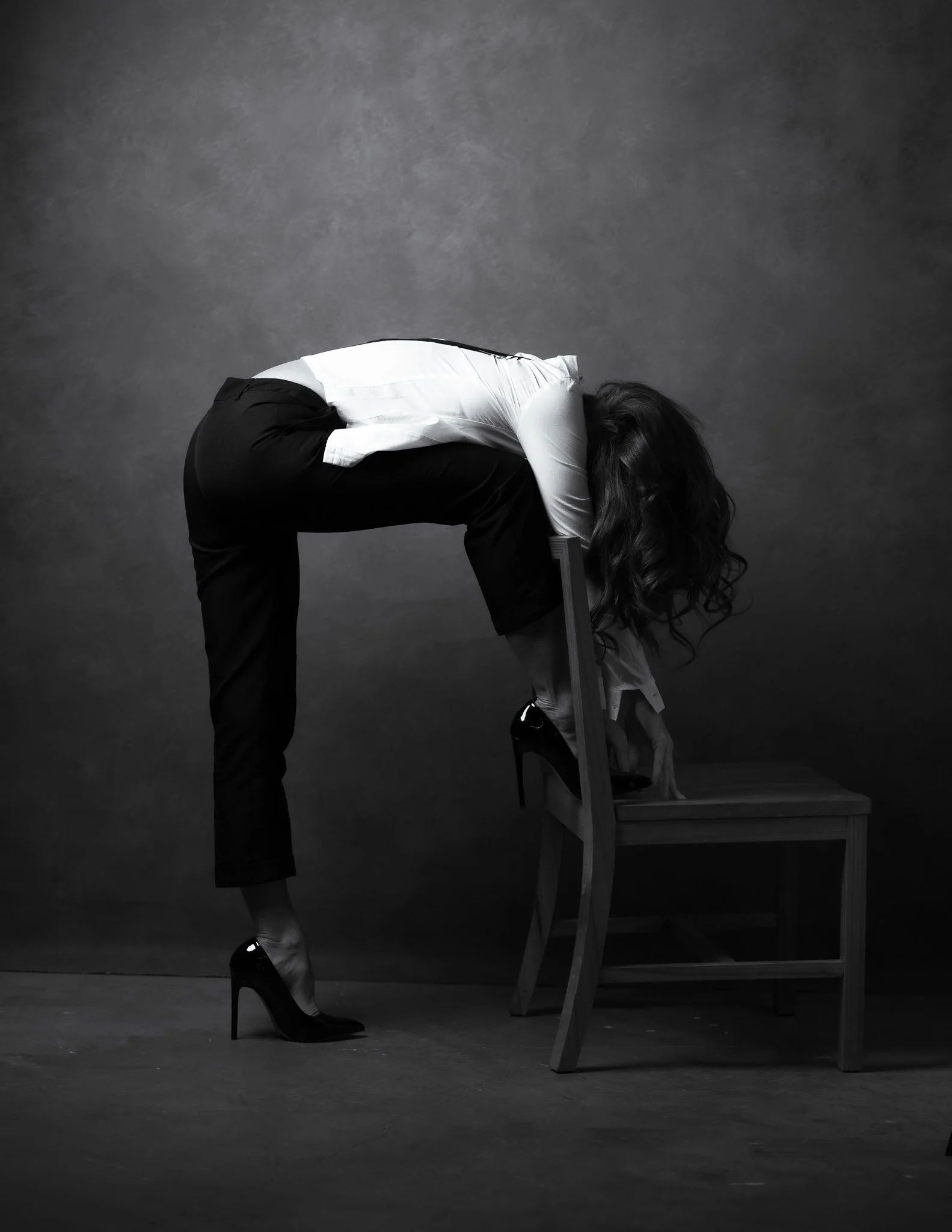
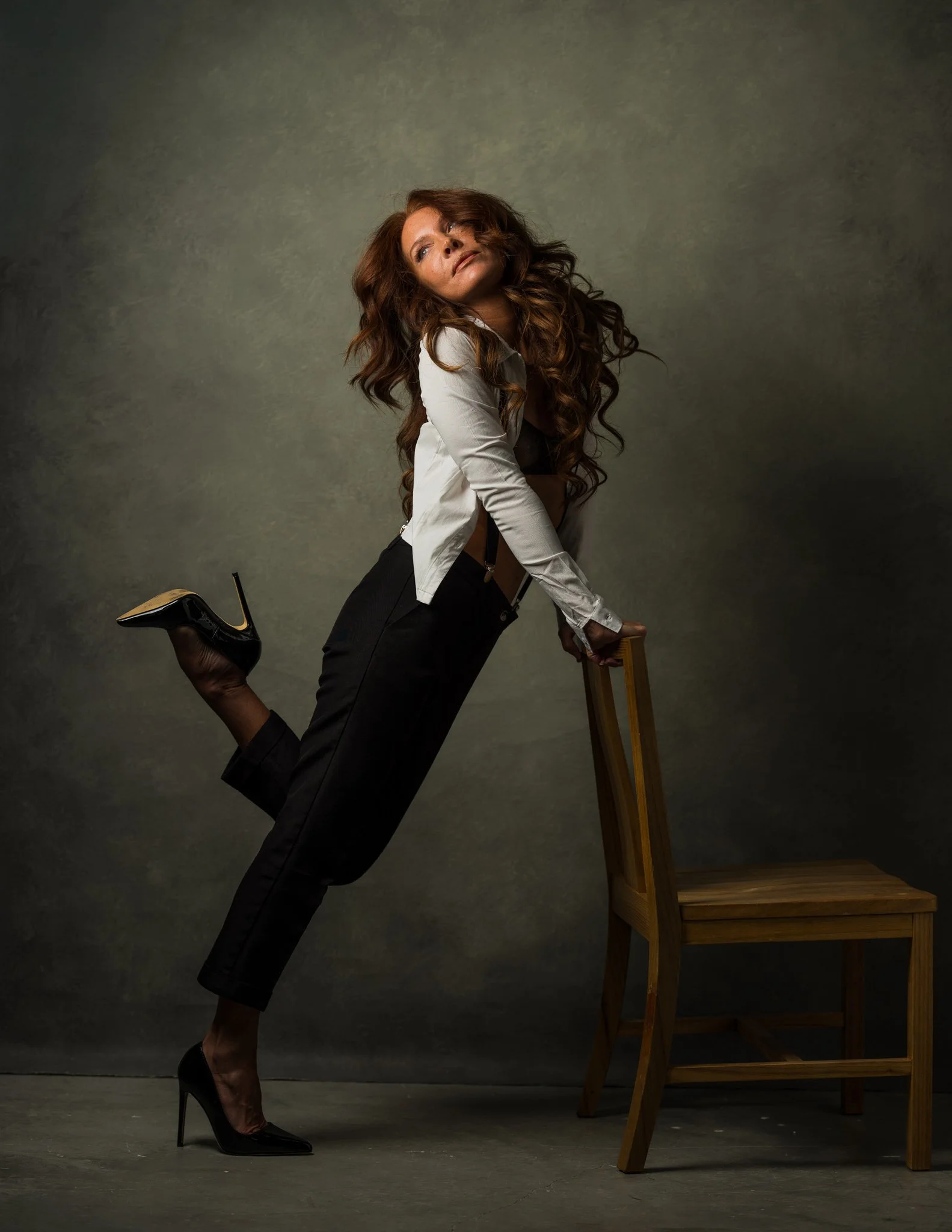
And throughout the session, the hands kept returning as punctuation. Resting against the face. Pulling lightly at suspenders. Suspended overhead. Pressed against furniture. Hands revealing tension long before expression does.
This is partly why restraint matters so deeply in my portraiture. Excess explains too much. Over-direction closes possibilities before they emerge. My quieter approach allows contradiction to survive inside the frame. Lucy could appear self-possessed and uncertain simultaneously. Controlled and exposed. Elegant and slightly feral. The images become more interesting once they stop trying to resolve these tensions.
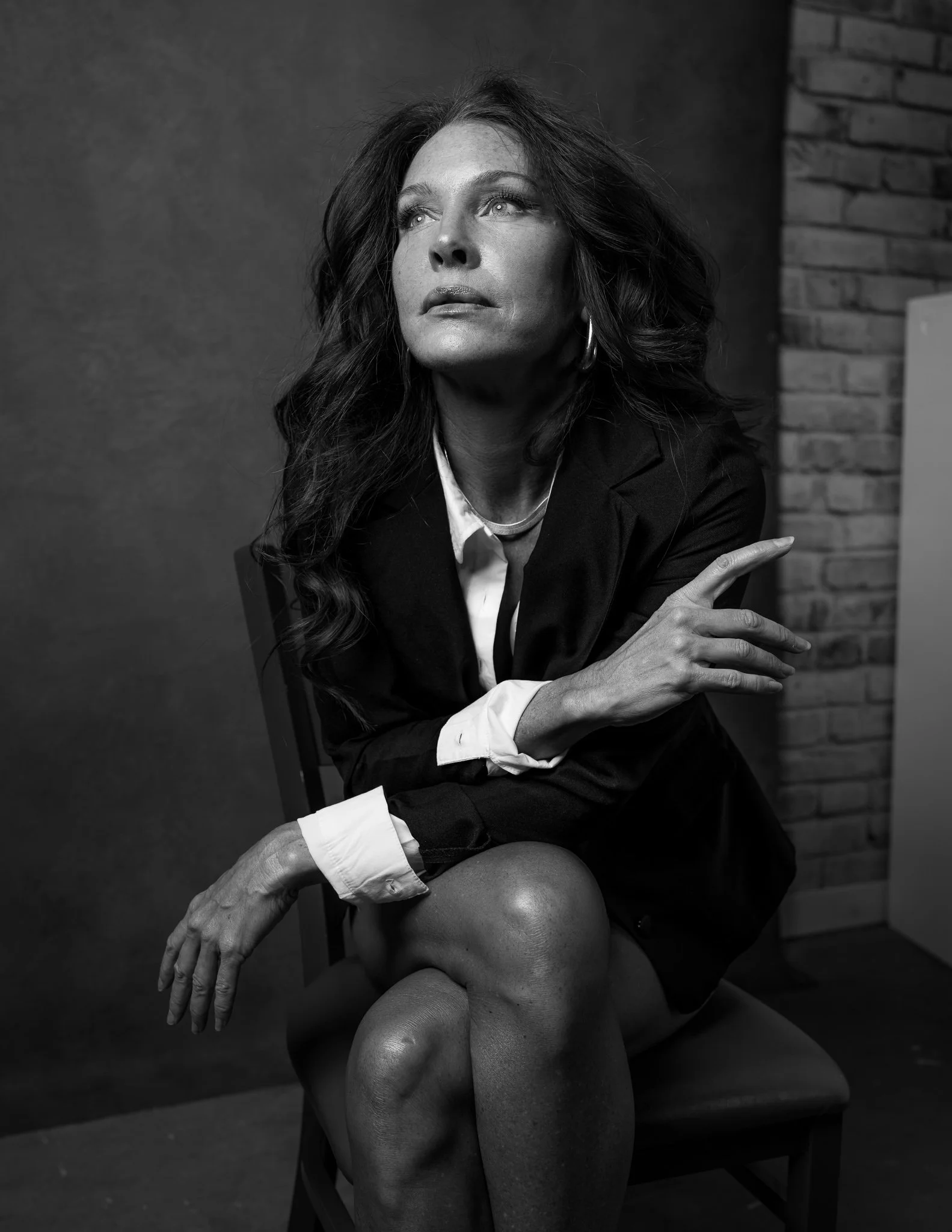
By the end of our session, the work no longer felt concerned with clothing. The tailoring remained, becoming secondary to presence itself, to the way Lucy occupies space once the performance of certainty begins loosening around the edges.
What remains in the final images is not a character, nor an archetype, nor an argument about femininity or power. It is something more difficult to name and probably more honest because of it.
A woman in a room, under soft light, deciding moment by moment how visible she is willing to become.
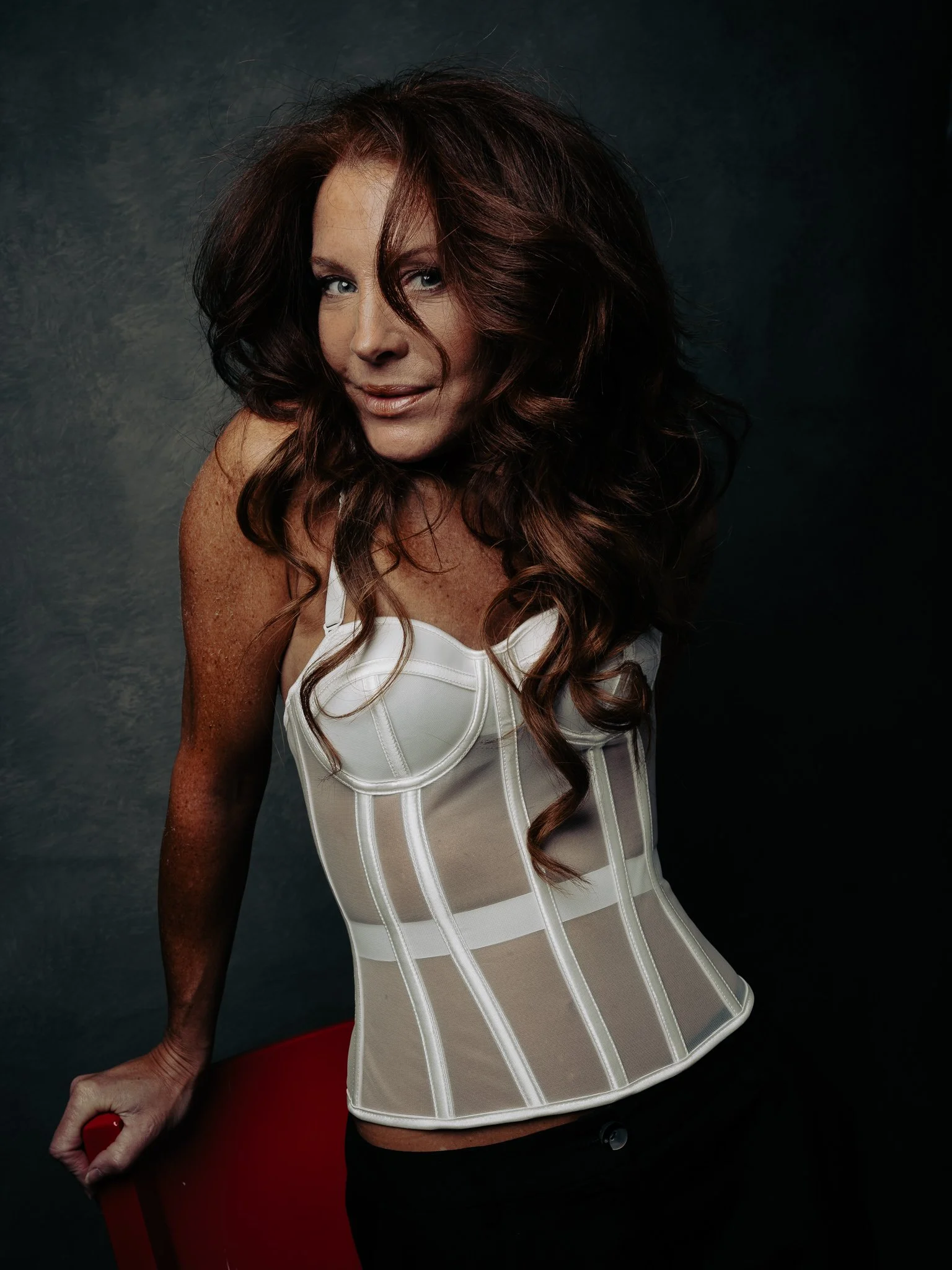
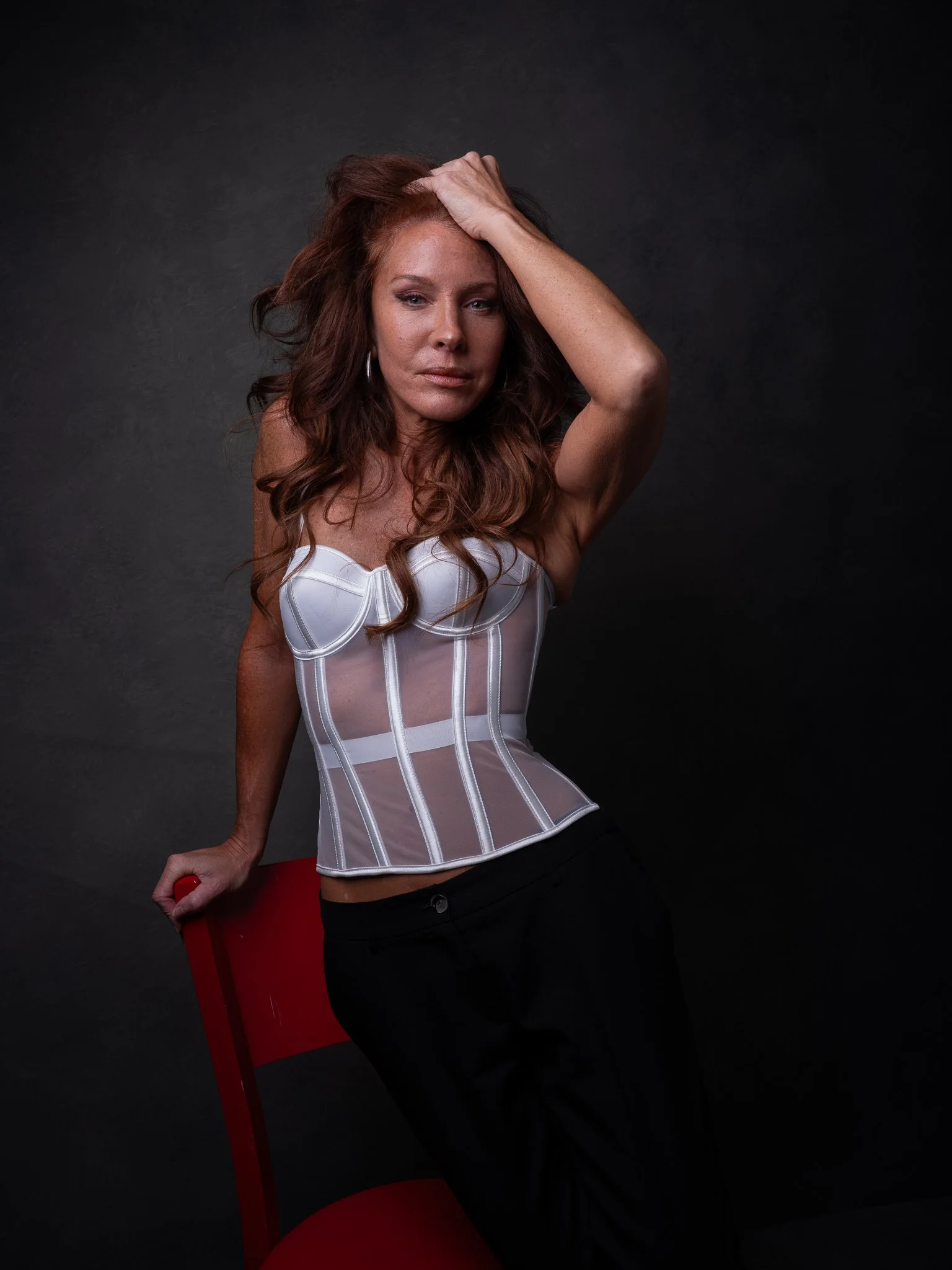
Editor's Note
Selected images from this session were published in Looker Magazine (54 Premium Fashion Issue), an international fashion and portrait publication. Their inclusion speaks not only to the visual strength of the work, but to the continuing evolution of Architecture of Presence as an ongoing examination of authorship, elegance, and embodiment through portraiture.